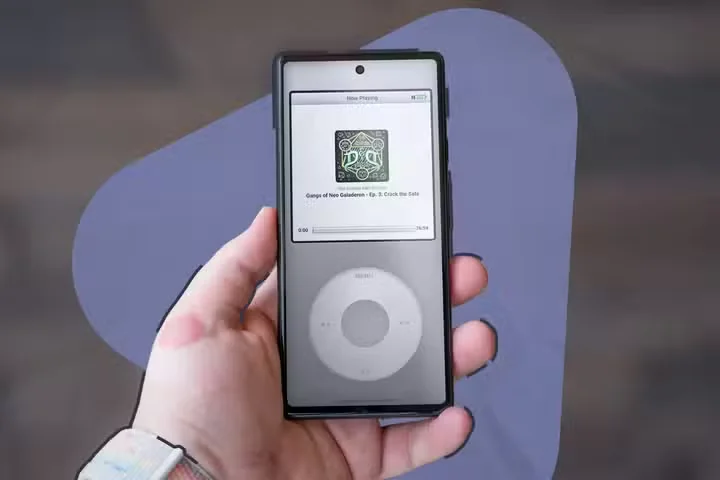
For anyone who came of age in the mid-2000s, the click wheel was a talisman. A thousand songs really did fit in your pocket, and the little white player that delivered them shaped how an entire generation related to music. One self-described iPod kid has now gone looking for that feeling again — and reports that a modern retro music player solved a problem they did not know they had: not the loss of a device, but the loss of the listening experience that came with it.
The logic sounds absurd until you try it. Smartphones hold every album ever recorded, yet they also hold every notification, email, and group chat ever received. Attention fractures accordingly; albums become shuffled background noise between interruptions. A dedicated player with physical controls restores friction in the best sense — you browse with your thumb, commit to a record, and nothing pings halfway through the fourth track. The simplicity that once felt limiting now reads as luxury.
The market has noticed. A cottage industry of retro-styled and click-wheel-inspired players now thrives alongside a brisk secondhand trade in refurbished classics, and accessory makers sell dock adapters and replacement batteries for hardware that is nearly two decades old. Some new devices even mimic the original interface wholesale, down to the satisfying mechanical click.
The revival says less about nostalgia for obsolete technology than about exhaustion with its replacement. When the most radical feature a music player can offer is silence from the rest of the internet, the past starts to look like the future.