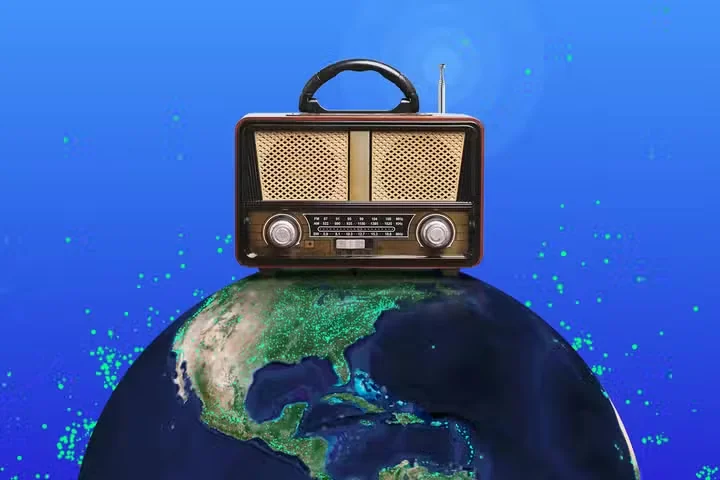
The recommendation algorithm knows what you like, and that is precisely the problem. After enough months of personalized playlists, many listeners discover their musical world has contracted into a comfortable, inescapable loop — the same fifteen influences, repackaged forever. One frustrated streamer describes finally breaking out of that bubble not with a bigger catalog but with a novelty: a radio app whose entire interface is a spinning three-dimensional world map, dotted with thousands of live stations pulsing like fireflies.
The experience is disarmingly simple. Zoom toward Seoul, Lagos, or a village in the Andes, tap a glowing marker, and whatever happens to be broadcasting right now fills your headphones. There are no skip buttons, no profiles, no engagement metrics — just a stranger's local DJ, a language you do not speak, and a song you would never have been served. Serendipity, long engineered out of streaming, returns by accident.
That accidental magic addresses a genuine crisis in music discovery. Studies of platform listening habits consistently show that personalization narrows rather than broadens exposure, and the industry's answer — AI playlisting — often deepens the loop. Live radio, by contrast, remains stubbornly unoptimized, which is exactly why it works: nobody is trying to keep you listening, so you actually want to.
Apps built around this globe-trotting concept occupy a tiny market share, but their popularity among burned-out subscribers suggests the demand is real. Sometimes escaping the algorithm requires nothing more than a map.