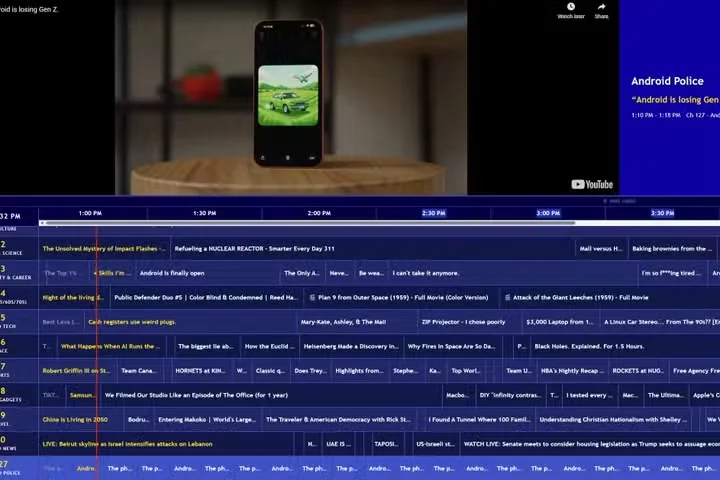
Cable television's most beloved ritual — the mindless comfort of channel surfing — has been resurrected without the cable bill. A free web tool called Channel Surfer converts a user's YouTube subscriptions into a live, grid-style TV guide, complete with channel numbers, program names, and the comforting illusion that something is always on.
The mechanism is deceptively simple: after signing in with a Google account, the tool arranges subscribed channels into virtual lineups and maps their published videos onto a broadcast-style schedule, so browsing feels like flipping through a program guide rather than scrolling an infinite feed. Up and down arrows replace the thumb drag, and the interface even renders the blocky nostalgia of old teletext guides. Its creator built it, by their own account, to cure the paradox of choice that makes opening YouTube feel like work.
Its popularity reveals something honest about streaming-era fatigue. On-demand abundance promised freedom but delivered decision exhaustion: users scroll for ten minutes, watch nothing, and close the app. Linear formats restore a psychological gift — the elimination of choice. Viewers accept whatever is on, and satisfaction paradoxically rises when options shrink. Channel Surfer packages that insight inside a browser tab with no subscription and no algorithm deciding what deserves attention.
Privacy-minded users should note that the tool requests access to subscription data, so reading the permission scope before signing in is wise. Still, the experiment matters beyond novelty. If a weekend hobby project can make YouTube feel calmer than YouTube's own interface, the platforms that engineered infinite scroll may have to decide whether frictionless abundance was ever what people actually wanted.